A Portfolio of Digital Artifacts
Computer Science & TOK Teacher | Educoder | Webmaster | TSA Adviser | Yearbook Adviser | VEX Robotics Coach
What Mr. Kapptie is working on right now
Active builds, classroom systems, and creative experiments currently moving from idea to artifact.
Education
 I began, quite fittingly, in a small place beneath a wide Wyoming sky at
Worland High School,
where the mountains whispered and the teachers did their best to compete with them.
I was a thinker then—perhaps a wanderer in denim—more interested in the questions behind the questions than the answers printed on the quiz.
Looking back, that period was less about acquiring knowledge and more about becoming aware of the kind of life I hoped to live.
Somewhere during those years, a mentor named Tim McGee helped plant the idea that I might one day become a teacher myself.
The path there, however, was far from direct. It would take another twelve years before I discovered that technology and computer science were the subjects through which I could best connect curiosity, creativity, and education.
I began, quite fittingly, in a small place beneath a wide Wyoming sky at
Worland High School,
where the mountains whispered and the teachers did their best to compete with them.
I was a thinker then—perhaps a wanderer in denim—more interested in the questions behind the questions than the answers printed on the quiz.
Looking back, that period was less about acquiring knowledge and more about becoming aware of the kind of life I hoped to live.
Somewhere during those years, a mentor named Tim McGee helped plant the idea that I might one day become a teacher myself.
The path there, however, was far from direct. It would take another twelve years before I discovered that technology and computer science were the subjects through which I could best connect curiosity, creativity, and education.
Growing up around computers of every kind sparked an early fascination with software, hardware, systems, and digital tools. That curiosity eventually led me to the University of Phoenix—a place where learning required equal parts discipline, adaptability, and persistence. There, I earned a Bachelor of Science in Information Technology and a Master of Arts in Education, but more importantly, I learned how education must often bend and evolve around the realities of life rather than pretend those realities do not exist.
Beyond formal degrees, my education never truly stopped. Certifications, workshops, teaching credentials, late-night YouTube rabbit holes, philosophical books with too many footnotes, conversations, failures, experiments—all of them became part of a larger architecture of ongoing curiosity. I never pursued education simply to collect credentials. I pursued it to remain awake, adaptable, and engaged with the world. Over time, I came to realize something both simple and difficult: the journey itself is the lesson.
Teaching
 My teaching path has never felt like a straight ladder. It has been more like a spiral—moving through different schools, different learners, and different seasons of life, each one reshaping what I understand about education, technology, and human growth.
At East High, I first learned the real rhythm of the classroom: not the rhythm written into policy, but the one created through eye contact, curiosity, confusion, humor, and trust. Stillwater Academy deepened that understanding. There, teaching was inseparable from patience and healing, and I learned that sometimes the most important thing a teacher can offer is not a perfect explanation, but a steady presence.
 Granite Peaks Adult Education showed me that learning is never limited to a particular age or stage of life. Many students arrived carrying complicated histories, responsibilities, and resilience, and they reminded me that education is often an act of rebuilding. Later, through community education and web-based courses, I saw how learning could stretch beyond the walls of a classroom while still depending on the same human need for connection, clarity, and encouragement.
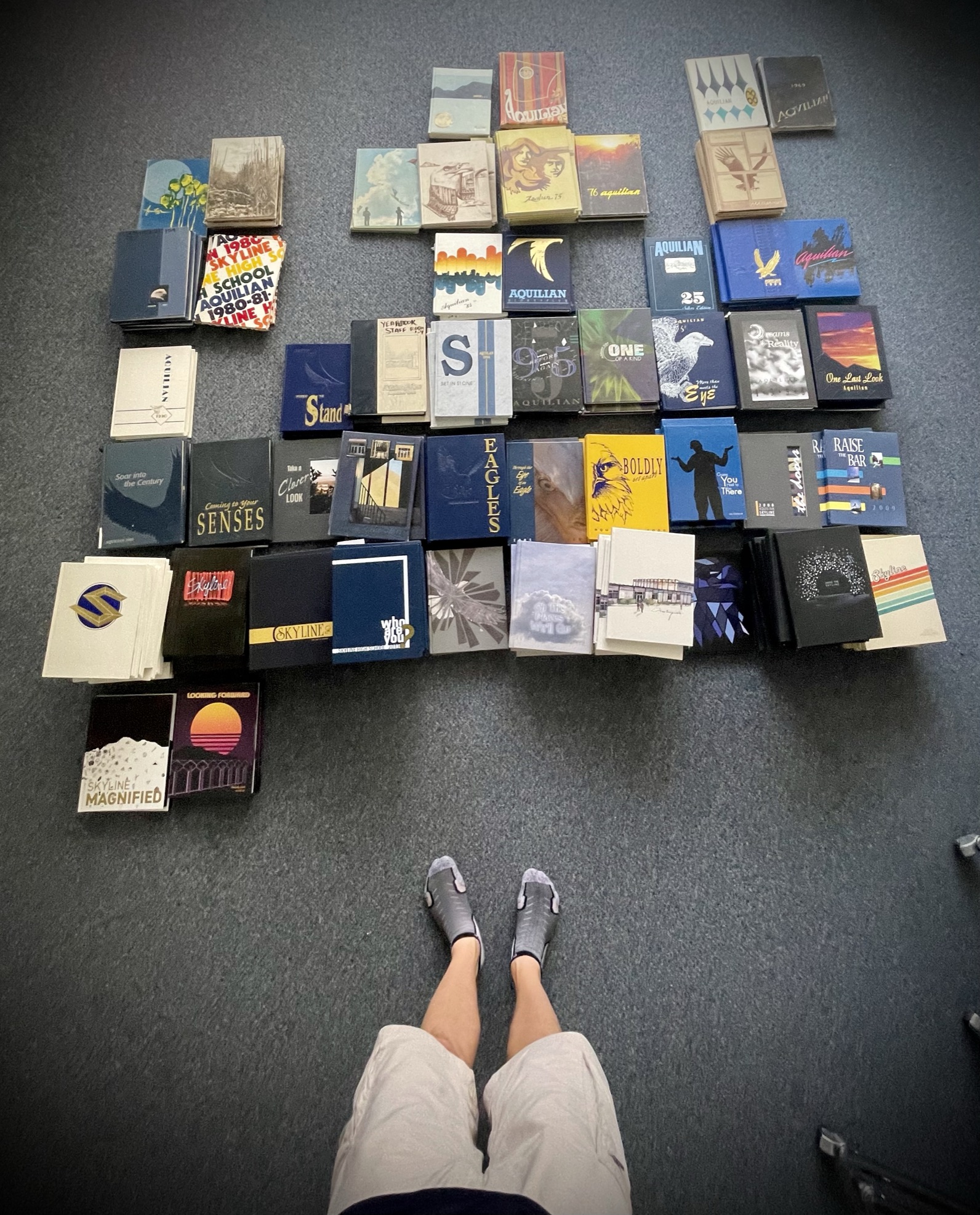
Skyline High School has become the place where many of these threads came together. Here, I teach computer science, multimedia production, game development, broadcasting, yearbook, and creative technology not as isolated subjects, but as ways for students to build confidence, solve problems, and leave visible evidence of their growth. I do not see teaching as simply delivering content. I see it as helping students make things, revise them, understand themselves through the process, and discover that their ideas are worth developing.
Projects
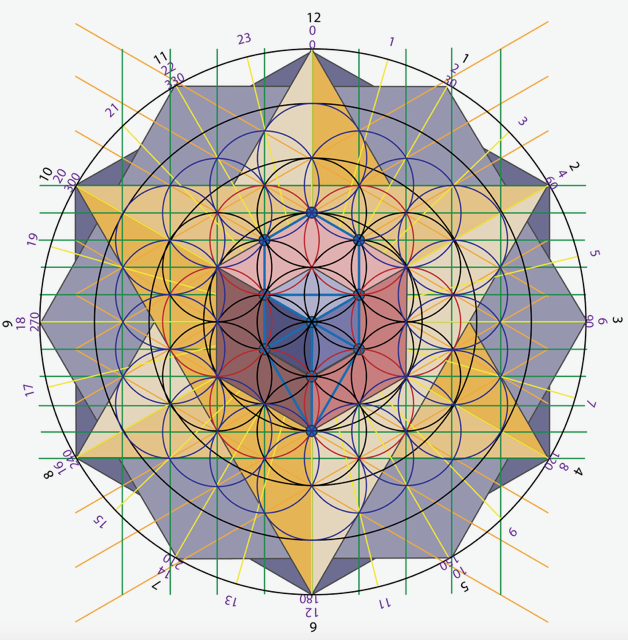 Projects are where curiosity becomes tangible. Each application, experiment, curriculum tool, visualization, or creative system on this page began with a question:
What would happen if this idea were explored a little further?
Some projects emerged from classroom needs, others from personal fascination, musical experimentation, philosophical reflection, or the simple desire to build something useful and beautiful.
Projects are where curiosity becomes tangible. Each application, experiment, curriculum tool, visualization, or creative system on this page began with a question:
What would happen if this idea were explored a little further?
Some projects emerged from classroom needs, others from personal fascination, musical experimentation, philosophical reflection, or the simple desire to build something useful and beautiful.
I rarely approach projects as finished products. Most are evolving systems—iterative, imperfect, and constantly teaching me something new about design, communication, problem solving, or human behavior. Many begin as small prototypes and gradually expand into larger ecosystems shaped by feedback, failure, and refinement. In that sense, the process itself becomes part of the artifact.
Across these builds, certain themes continue to reappear: creativity through structure, visual clarity, accessibility, systems thinking, music, education, reflection, and interaction. Whether I am building classroom tools, collaborative music systems, adaptive learning environments, or strange experimental visualizers, the deeper goal remains the same: to create experiences that help people think, explore, connect, and make meaning.
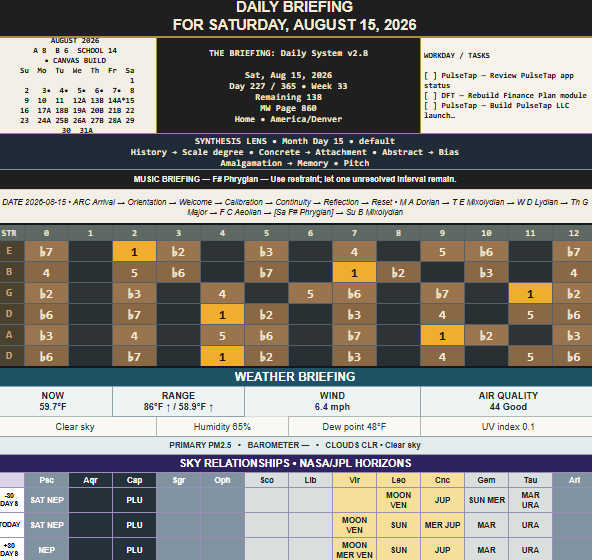
Daily Briefing — Student Edition
A configurable personal briefing system for planning, reflection, learning, attention, and daily documentation—all inside Google Sheets. Students can track their day, build projects and tasks, reflect on what matters, explore music, weather, sky data, language, and knowledge signals, and generate a polished daily briefing from their own inputs.
Create Your Copy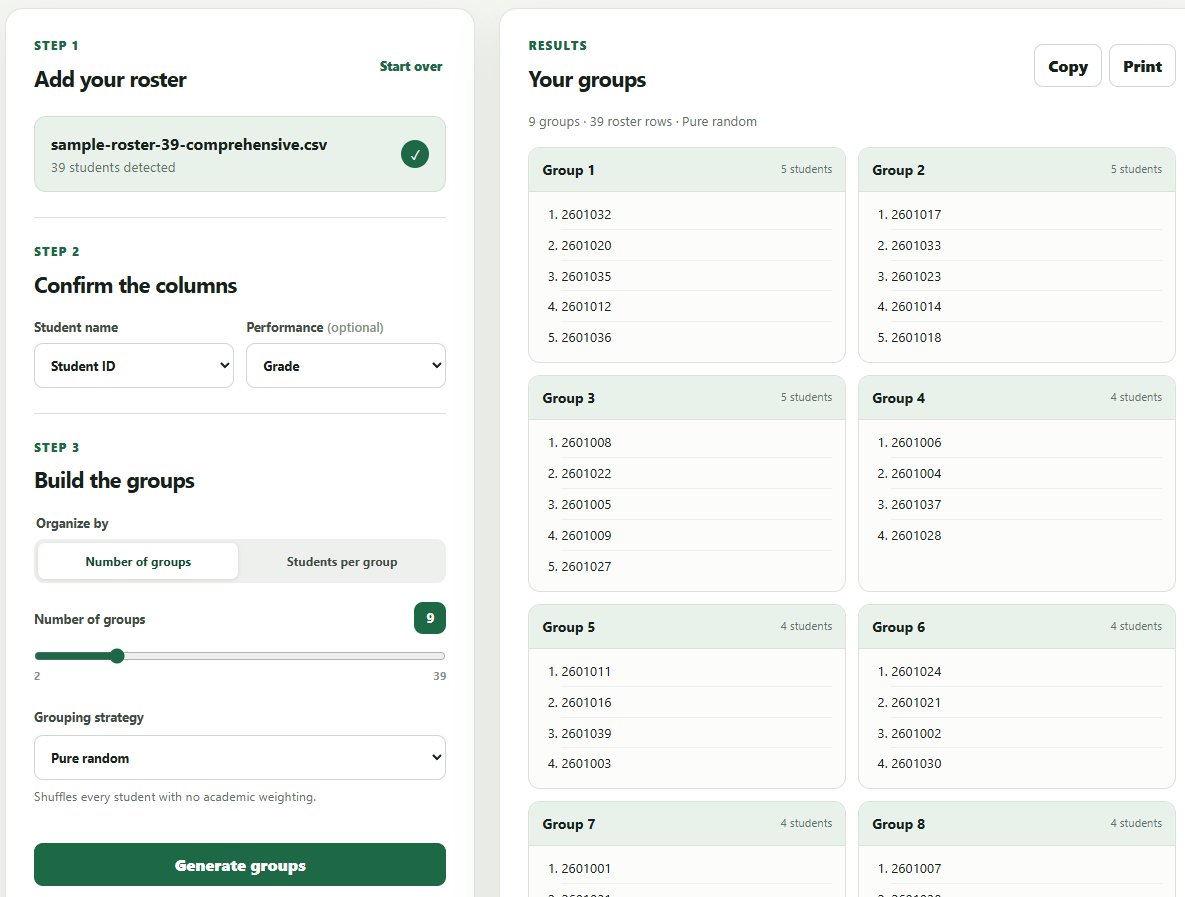
GroupMaker
GroupMaker turns a class roster into useful, classroom-ready groups. Import a CSV and create random, balanced, high-low, or similar-readiness groups—all locally in the browser, without uploading student data.
View on GitHub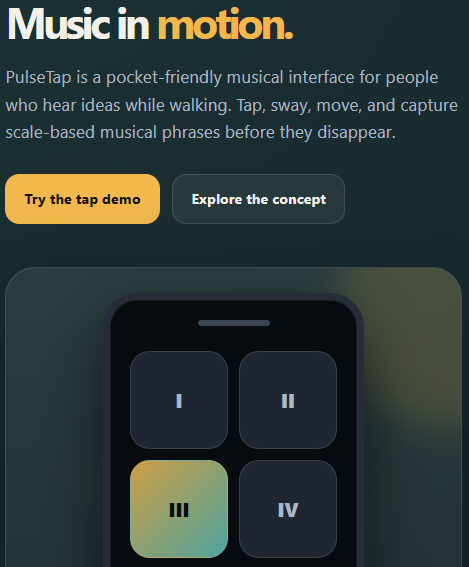
PulseTap
PulseTap is a pocket-friendly musical interface for people who hear ideas while walking. Tap, sway, move, and capture scale-based musical phrases before they disappear.
View on GitHub
GPA Calculator
Maybe as a freshman who just had a rough first year, you’re probably feeling stressed about your GPA and wondering if you can still hit a 3.5 or even a 3.2 by the time you’re a senior. Let’s break down the EstimateYourGrade app in a way that’s super clear and hopeful, focusing on how it can help you figure out if those goals are possible.
View on GitHub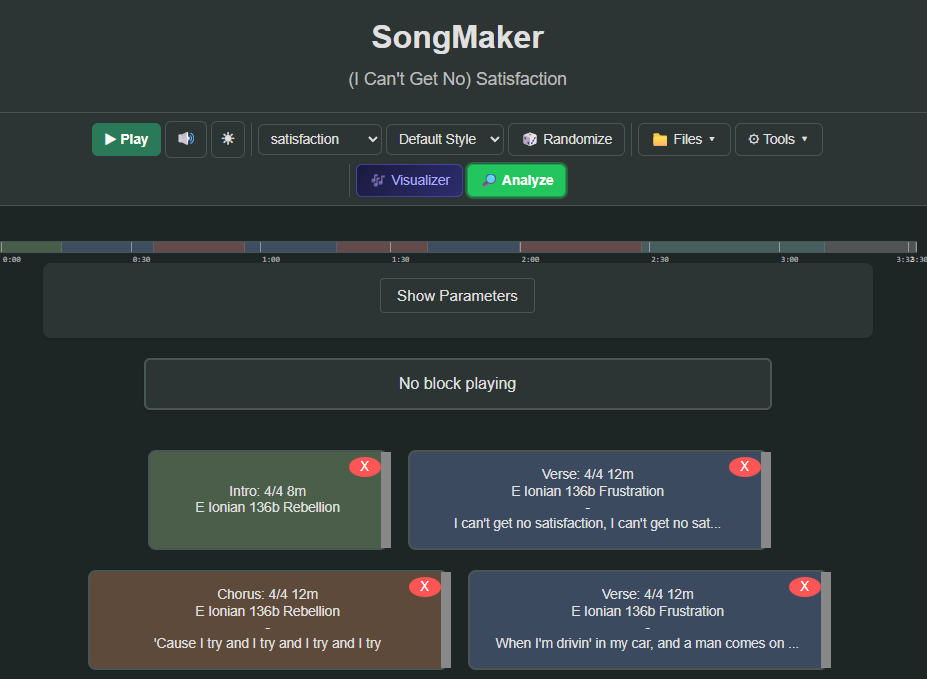
SongMaker
An interactive composition, rehearsal, and analysis workspace for designing songs as structured musical timelines. Build and rearrange sections, define measures, key, mode, tempo, time signature, feel, and lyrics, then rehearse the arrangement with synchronized metronome playback and visual timing. SongMaker also supports MIDI export, printable layouts, song visualization and analysis, and structured JSON import from the Music Theory Journey builder—connecting harmonic exploration directly to practical song construction.
Open SongMaker View on GitHub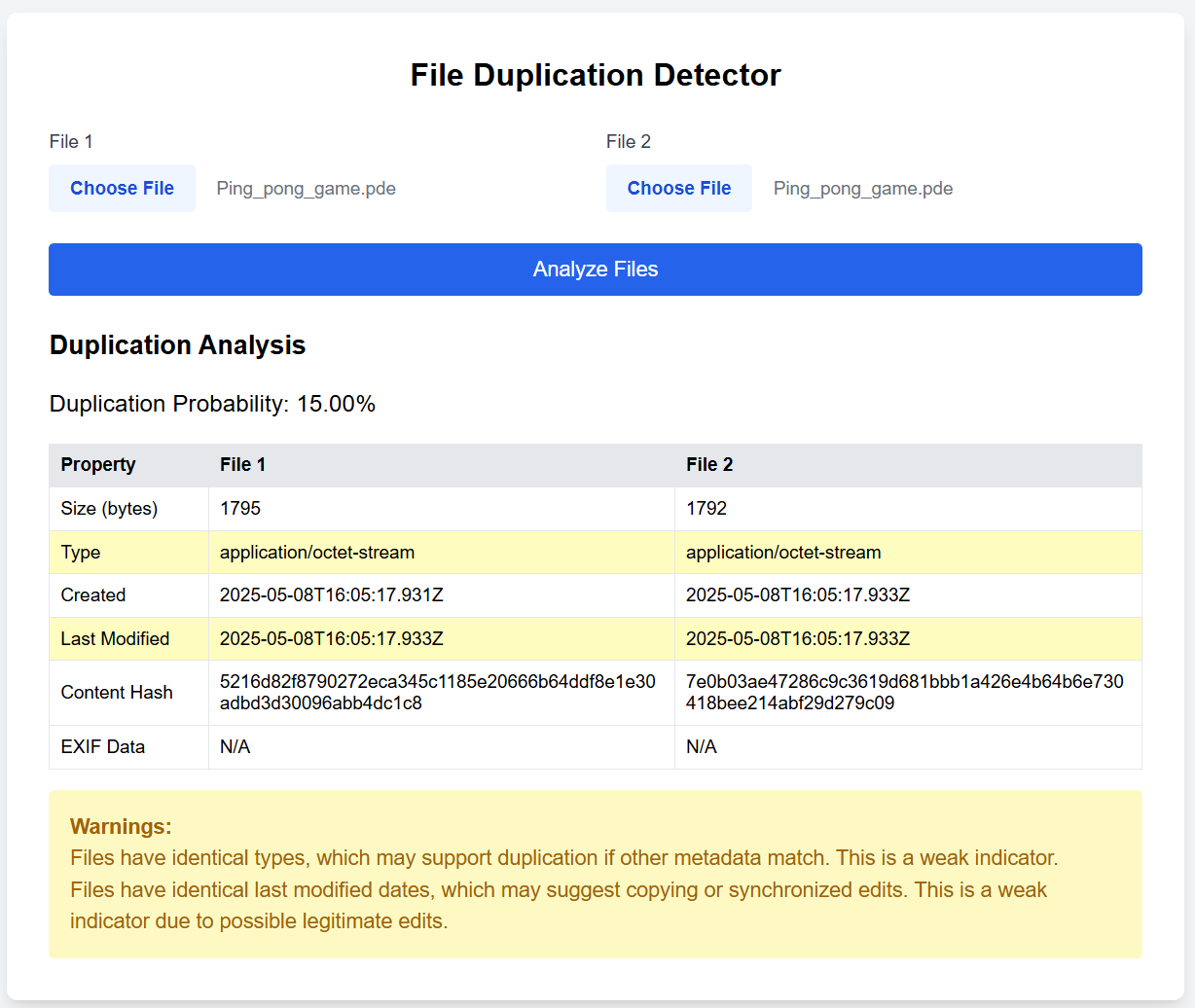
Forensic Submission Analyzer
A browser-based digital evidence tool for educators that analyzes batches of student submissions for meaningful similarities. It can inspect content hashes, file metadata, embedded document authorship, creation timestamps, document lineage, text similarity, and other forensic indicators. Canvas and Google Classroom ZIP exports can be analyzed directly in the browser, helping educators identify patterns that warrant closer review without treating the software itself as a determination of plagiarism or intent.
Open Analyzer View on GitHub
Random Visualizer
Live Random Calculator is an interactive educational web application for computer science and game development. It compares 14 random number generation methods—from Pi digits and LCGs to PCG, Perlin noise, Sobol sequences, and cryptographic sources—using real-time visualizations, multi-base support (2–16), adjustable speeds, and built-in statistical analysis to help students understand randomness quality.
View on GitHub
InBetween
InBetween is a guided dialogue application for meaningful or difficult one-on-one conversations. Two participants identify their current emotional states, define the roles or personas they are bringing into the interaction, and record their starting perspectives on a shared topic. During the conversation, either person can capture moments of insight or movement and optionally score whether the exchange is moving them toward or away from understanding. InBetween visualizes those changes over time, then guides both participants through reflection on how their perspectives and roles changed. The final report brings together starting and ending viewpoints, recorded motion moments, relational alignment, and role transformations—turning an otherwise implicit conversation into a visible journey of perspective and mutual understanding.
Open InBetween View on GitHub
Synthesis Log
Synthesis Log is a multi-stage circular reflection tool designed to help you discover connections where none seemed to exist before. By rotating terms through two to five stages of deepening reflection—from historical context through concrete analysis to conceptual amalgamation and actionable motion—you build a perpetual spiral of insight that compounds over time. Each day introduces new terms while earlier ones mature through successive stages, creating an intricate web of associations that reveals the hidden architecture linking disparate concepts. This is more than a journaling app; it's a deliberate practice in spiraling out, in widening your aperture to see how music theory connects to motion verbs, how philosophy interweaves with biology, how your own thoughts form bridges across domains that conventional thinking keeps separate. The ultimate vision extends beyond personal reflection to a shared space where you can browse the spirals of others, witnessing how different minds weave their own paths through the same conceptual landscape, each journey unique yet resonant, each connection an invitation to see the world through new eyes.
Reports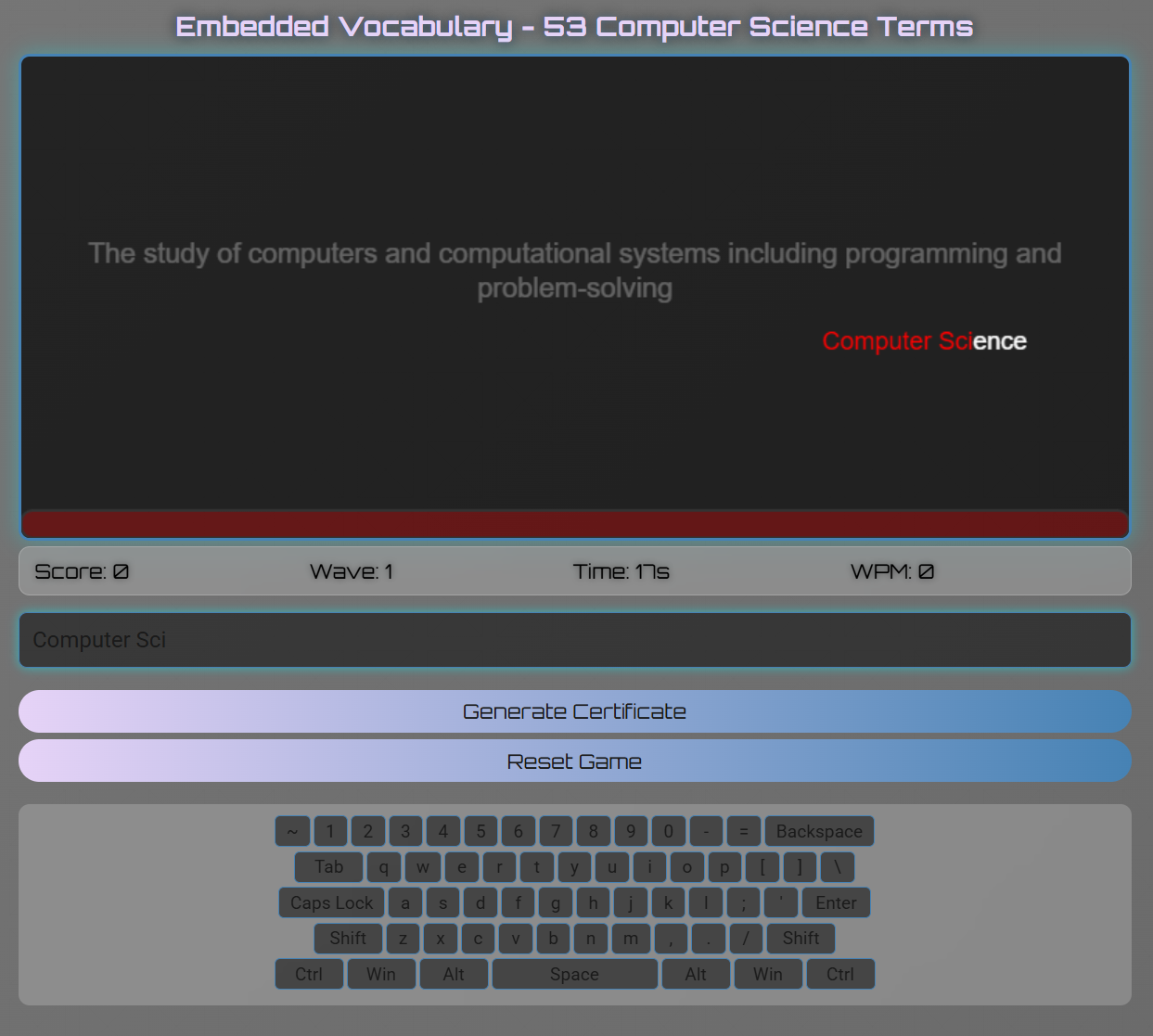
KappStudy
The Vocabulary Quiz System is an interactive web application designed to empower students to master vocabulary terms and definitions across various subjects. Tailored for educational environments, it offers a dynamic, accessible interface for students to take quizzes and for teachers to manage vocabulary sets. Themed with school colors and packed with features like a quiz timer, dynamic titles, and detailed reports, this app enhances learning and engagement.
View on GitHub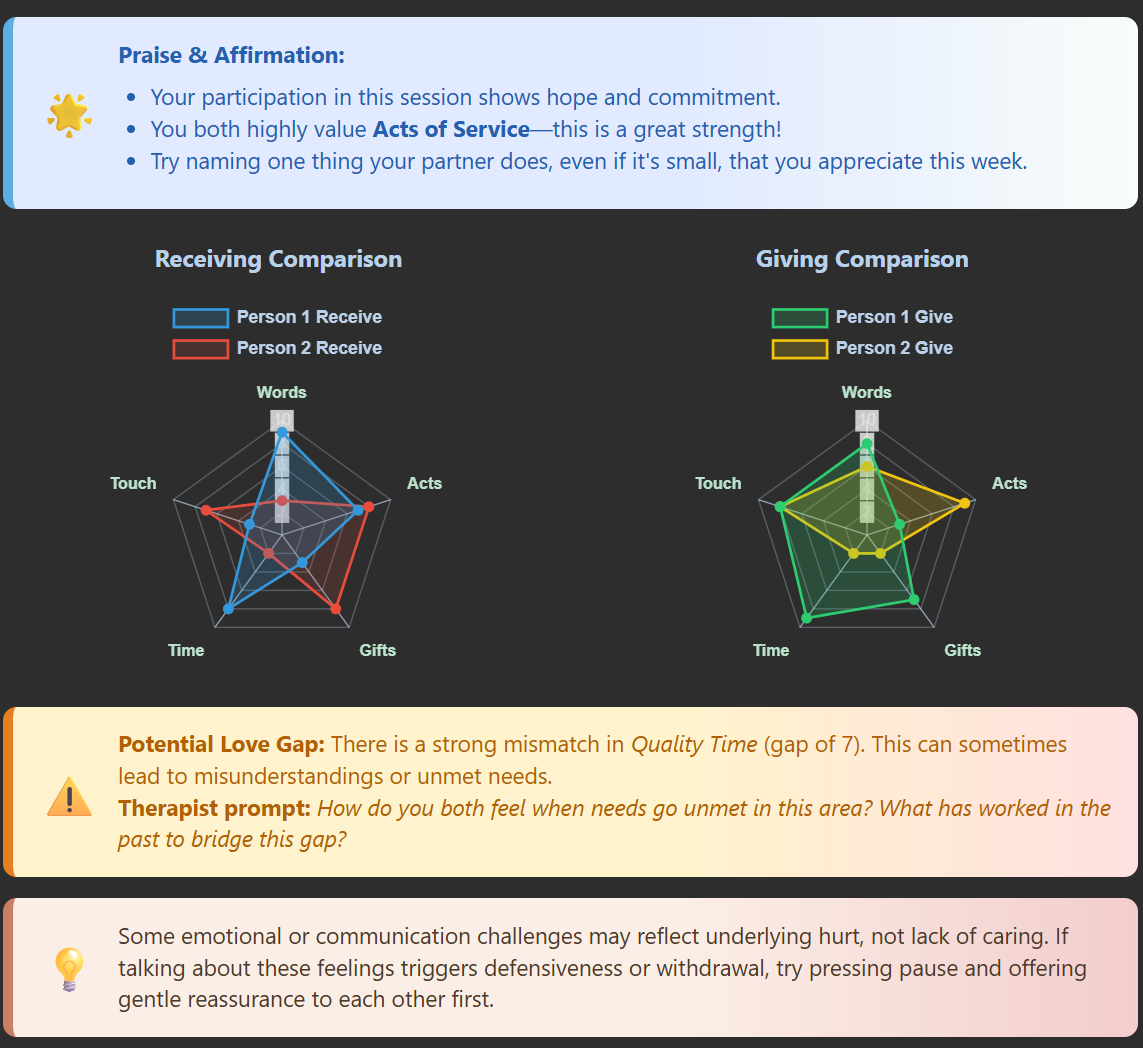
LoveSync
LoveSync is a mobile-first, interactive web app that reimagines Gary Chapman's The 5 Love Languages® as a dynamic self-evaluation tool. Users rate their preferences for receiving and giving love across five categories—Words of Affirmation, Acts of Service, Receiving Gifts, Quality Time, and Physical Touch—using intuitive 1-10 sliders for each mode.
View on GitHub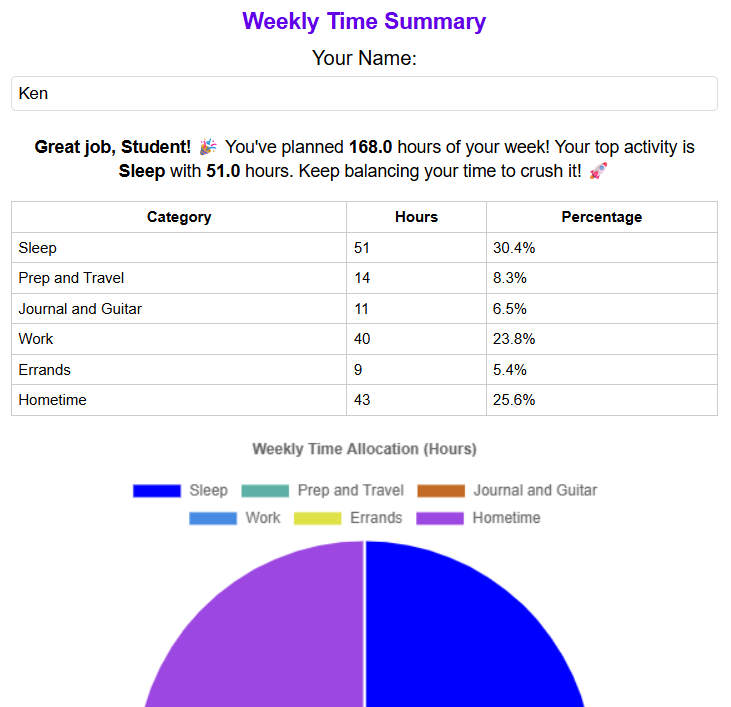
BlockTime
BlockTime is a minimalist web app designed to help users, particularly students, manage their weekly time allocation. Inspired by a Lego-based time management concept, it allows users to create custom categories, assign colors, and "drop" blocks into a 7-day grid (Monday to Sunday) to represent time spent on activities. Each block shows its category and time range (e.g., "Sleep: 8:00-8:30 PM"), with time labels (12AM, 6AM, 12PM, 6PM) integrated into the grid. Running totals for categories and the week are displayed below the grid. Users can copy days, save/apply day types (e.g., Work, Weekend), save/load schedules as JSON, and undo actions. The app supports time resolutions (15, 30, or 60 minutes) and generates a report with a summary, table, and pie chart, downloadable as a PDF. It’s optimized for desktop and mobile with a touch-friendly, simple design.
View on GitHub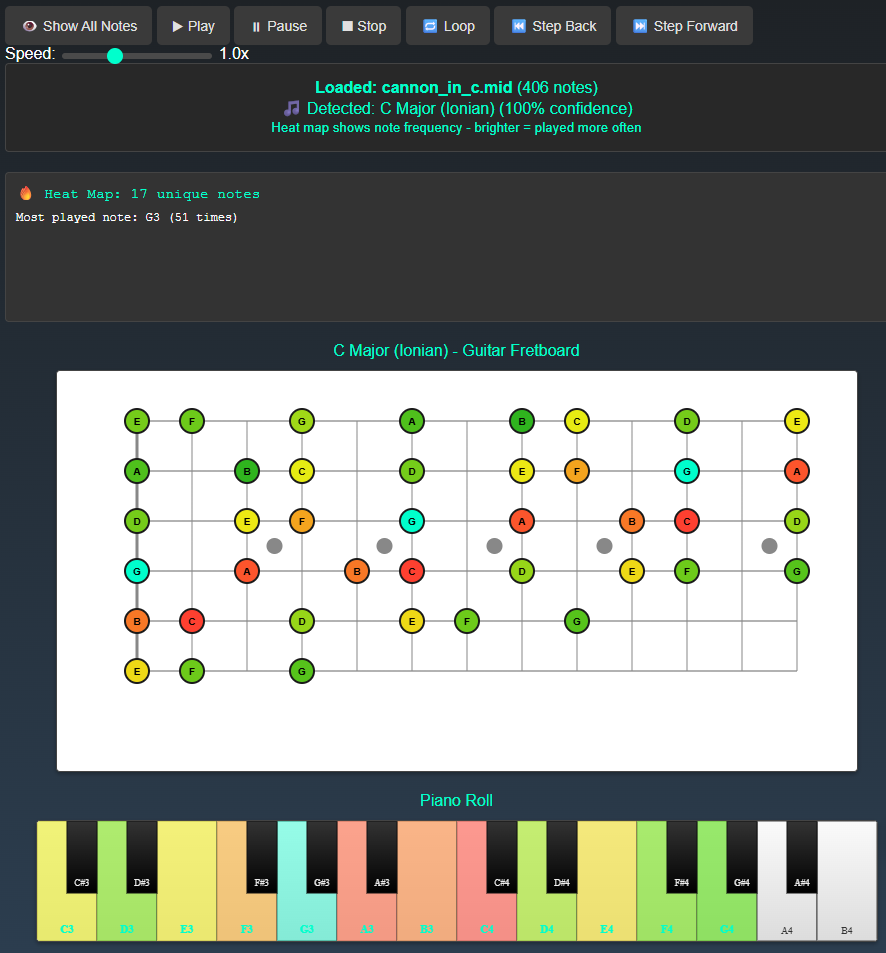
FretFlow
A web application that visualizes MIDI files in real-time on both a guitar fretboard and piano roll. This project merges MIDI visualization functionality from FretFlow with the design aesthetic of musicTheory.
View on GitHub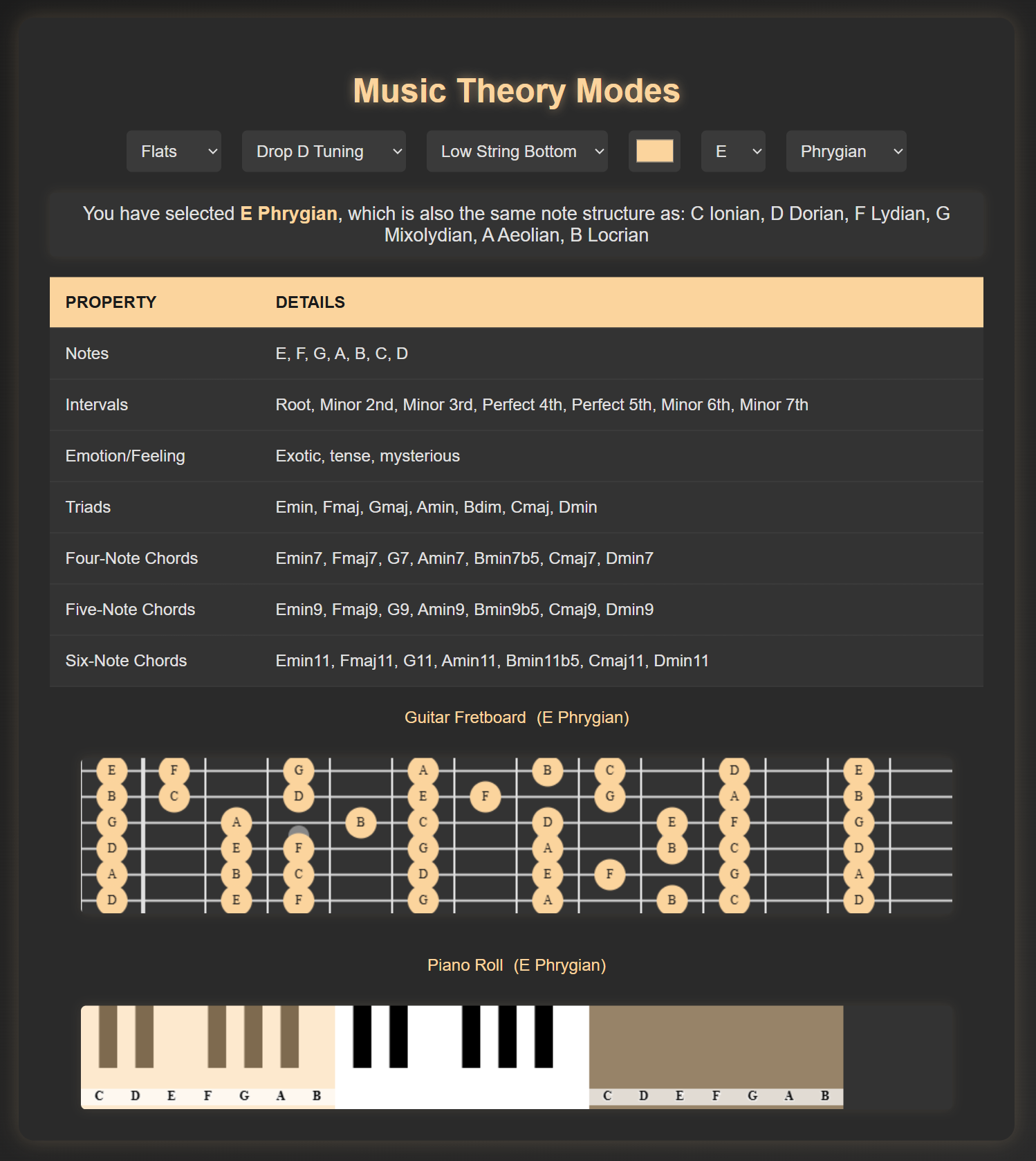
Music Theory Modes + Journey
An interactive music theory workspace for exploring scales, modes, harmony, and musical movement across guitar and piano. The Explorer visualizes modes in any key with customizable notation, guitar tuning, intervals, chords, and modal characteristics. Journey extends the tool into composition by allowing musical ideas to unfold across song sections, tracking roots, modes, feel, tension and resolution, instrumentation, energy, time signatures, and lyrical ideas. Completed journeys can be exported as structured SongMaker data, turning music theory exploration into a practical songwriting workflow.
Open Journey View on GitHub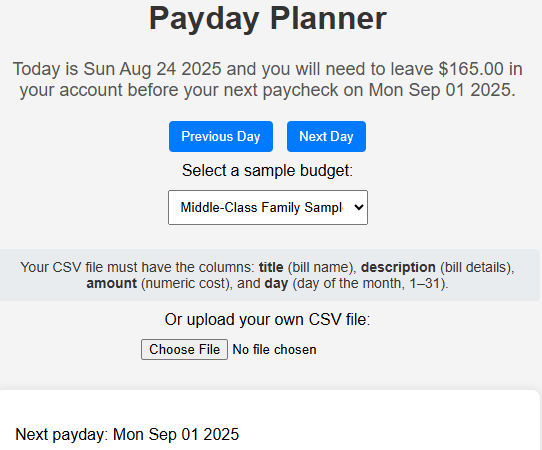
Payday Planner
Payday Planner is a simple web app that helps you manage your monthly bills by calculating the total amount needed in your checking account until your next payday (assumed to be the 1st or 15th of each month). Upload a CSV file with your bills, and the app will display the next payday, the total amount required for bills due before then, and a detailed list of those bills.
View on GitHub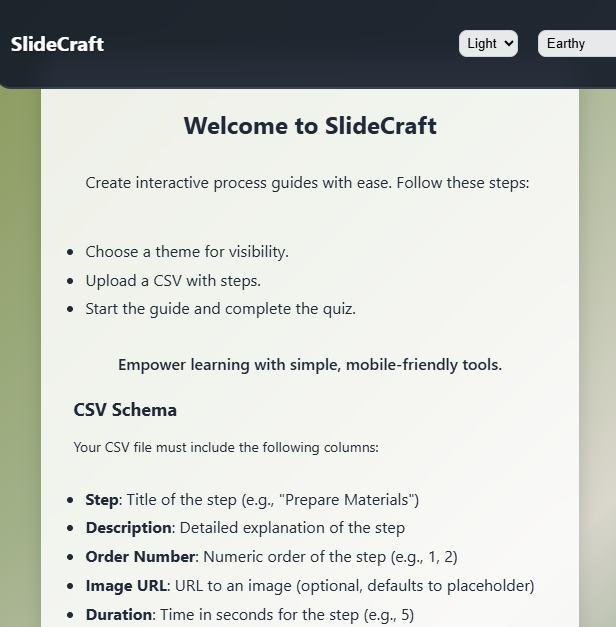
SlideCraft
SlideCraft is a web-based application designed for high school students and educators to create interactive, presentation-style process guides from a CSV file. Users can upload a CSV containing process steps, select from predefined processes, view them in a full-screen, clickable interface (optimized for phones and projectors), choose between Light and Dark themes, and complete a random multiple-choice quiz. The app tracks the time taken and allows users to upload a photo of their process results, generating a PDF report suitable for submission to Canvas or other learning management systems.
View on GitHub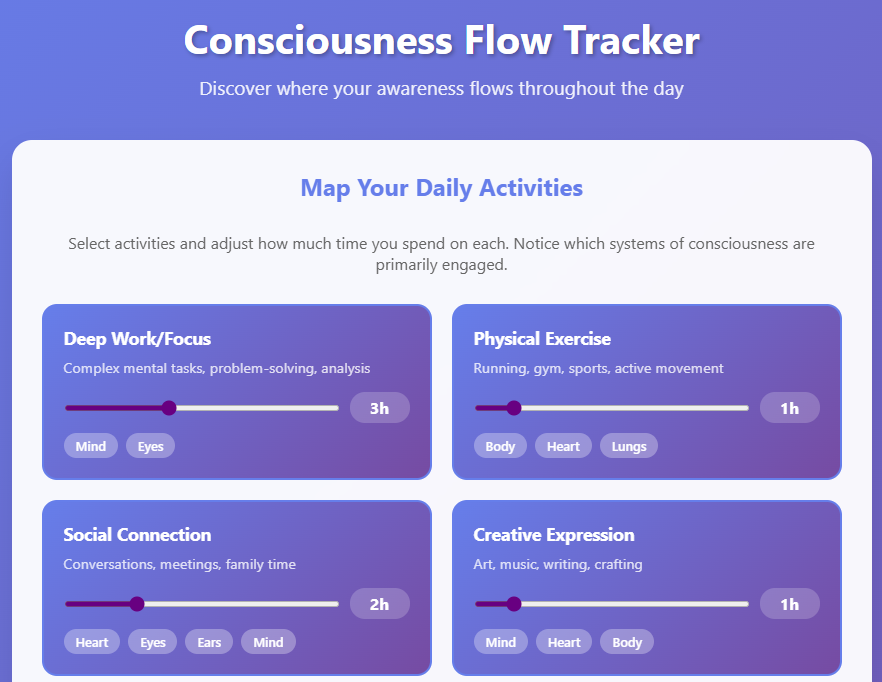
Untethered Day
Work in progress: The Consciousness Flow Tracker is a web-based application designed to help you map and visualize how your awareness and consciousness shift throughout the day based on your activities. Inspired by concepts from The Untethered Soul by Michael Singer, the app allows you to input daily activities, adjust their intensity (normal or excess), and see an animated pie chart representing the distribution of consciousness across systems like mind, body, heart, senses, and rest. The goal is to promote self-awareness and encourage a balanced lifestyle.
View on GitHub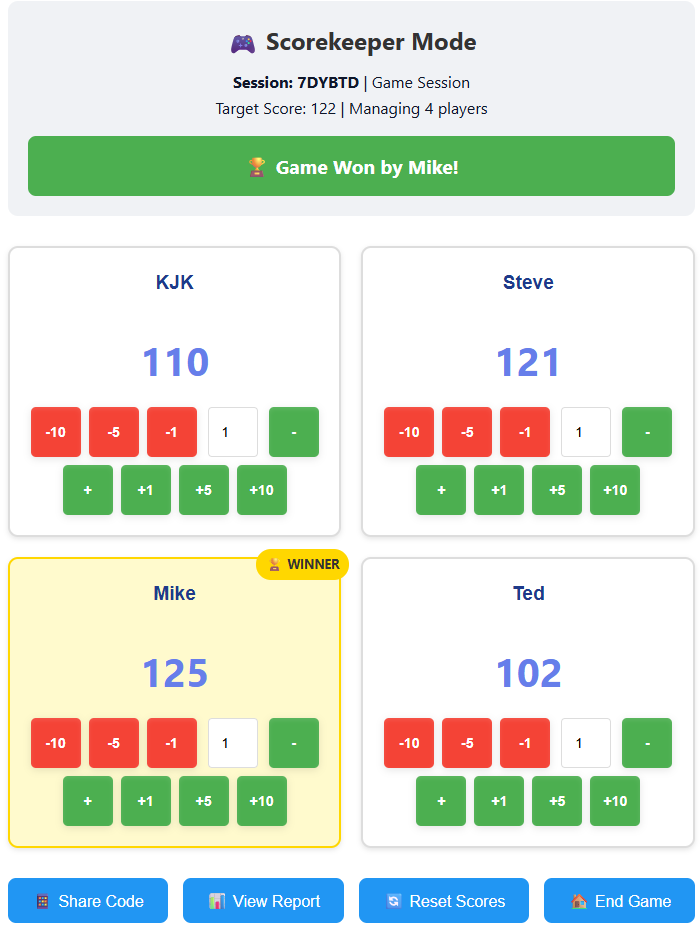
GameScore Pro
GameScore Pro transforms any gathering into a seamless scoring experience. Whether you're playing cards with family, hosting a golf tournament, or running a board game night, GameScore Pro keeps everyone connected and engaged with real-time score tracking that works across all devices.
View on GitHub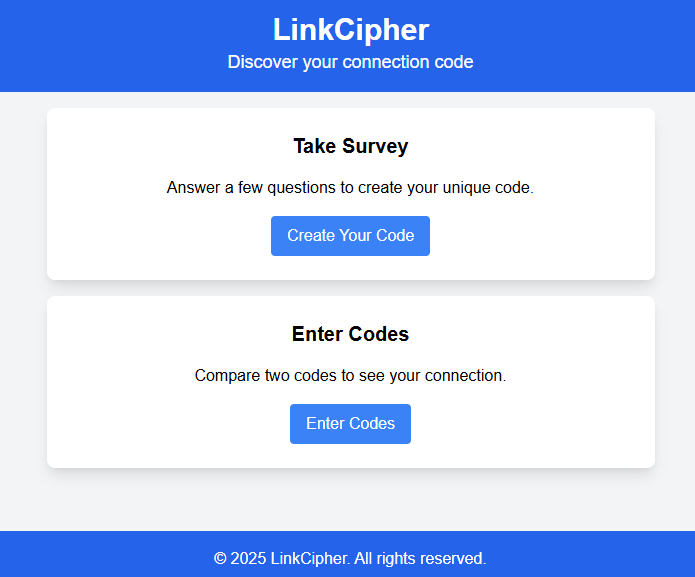
LinkCipher
LinkCipher is a web-based app that helps users discover compatibility in relationships—whether romantic, professional, familial, or otherwise—through a unique, privacy-focused approach. By taking an adaptive survey, users generate a cryptic code that encapsulates their core values and life experiences. Share this code with another person to reveal links, disconnects, and caveats, presented in engaging visualizations like bar charts, Venn diagrams, or vertical lines. No data is stored, ensuring complete privacy.
View on GitHub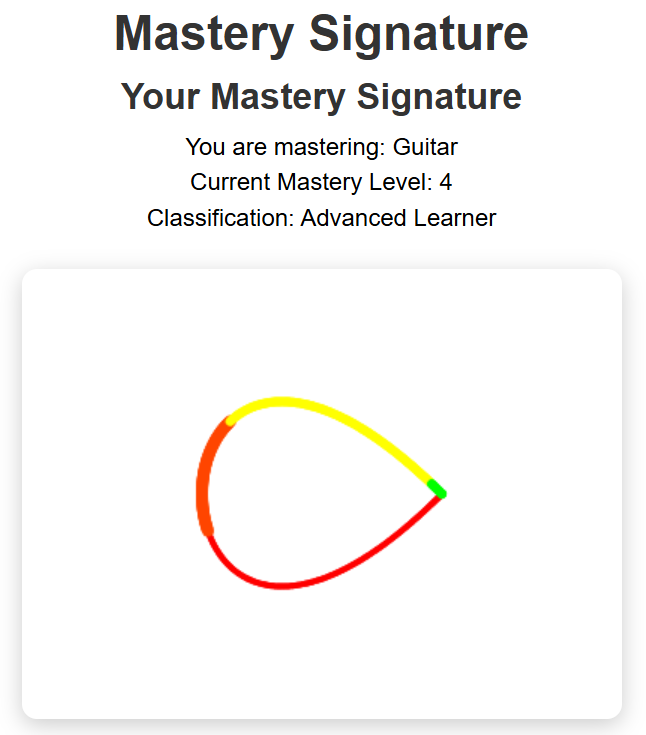
Mastery Signature
Work in progress - Mastery Signature is a dynamic web app designed to help you visualize and track your journey toward mastery in any discipline. By answering a series of questions about the time you’ve invested and the challenges you’ve faced across seven levels of mastery—from initial exposure to innovation—you’ll create a unique "mastery signature."
View on GitHub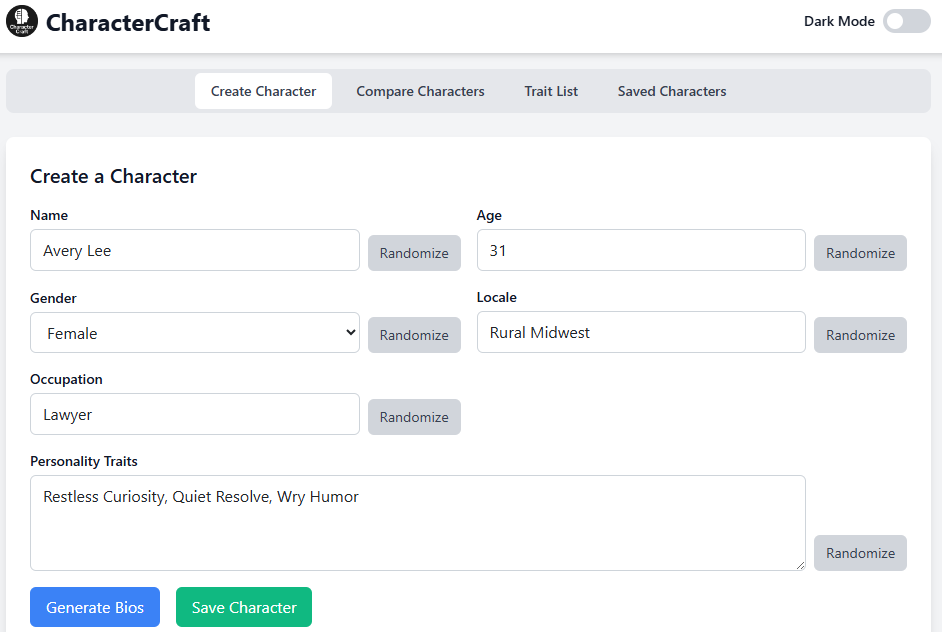
CharacterCraft
CharacterCraft is a web-based tool inspired by The Writer's Digest Sourcebook for Building Believable Characters by Marc McCutcheon. It helps writers, educators, and storytellers create and manage detailed, believable characters through randomization, trait assignment, and bio generation. The app features a responsive interface with dark mode, exportable HTML reports, and an interactive Trait Bubbles screen with category filtering for dynamic character development.
View on GitHub
Adaptive Testing
This is a web-based adaptive assessment to help high school students determine their best fit for yearbook staff roles (Leadership, Photography, Design, Sidebar, Journalist, Page Finisher).
View on GitHub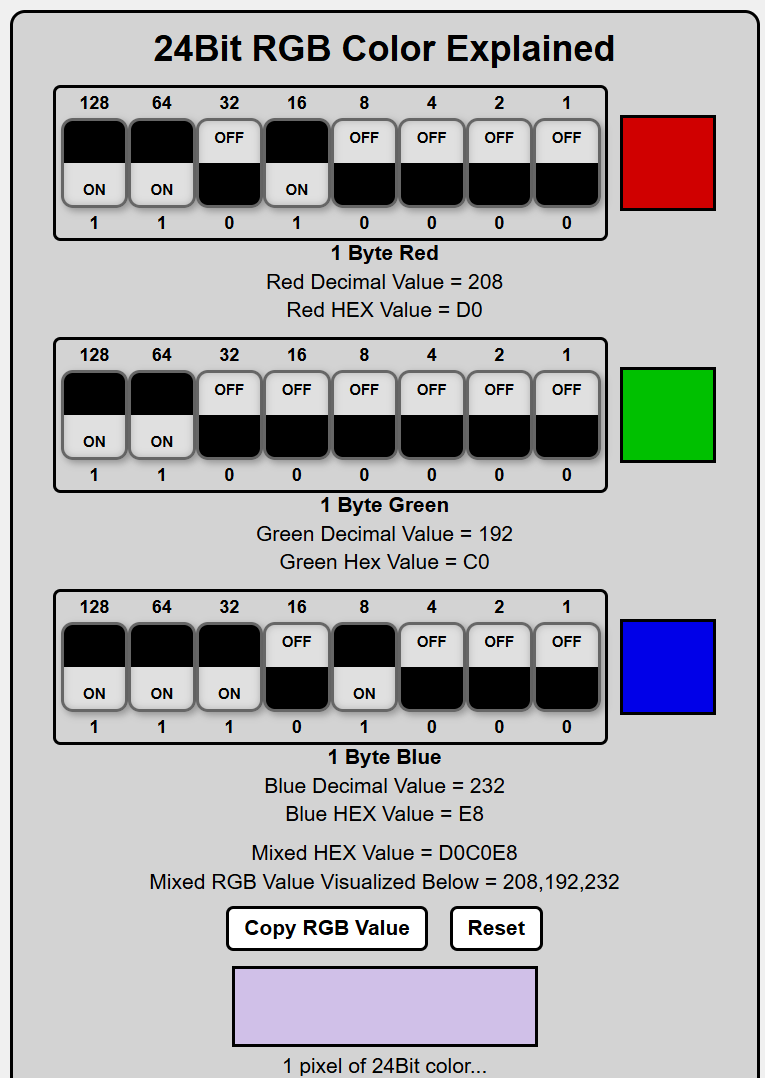
RGB Color Visualizer
The 24Bit RGB Color Visualizer is an interactive web application designed to help users understand and experiment with 24-bit RGB color values. It provides a hands-on way to manipulate the individual bits of the Red, Green, and Blue color channels (8 bits each, totaling 24 bits) to create colors. The app displays the decimal and hexadecimal values for each channel, the combined RGB and hex values, and a visual preview of the resulting color.
View on GitHub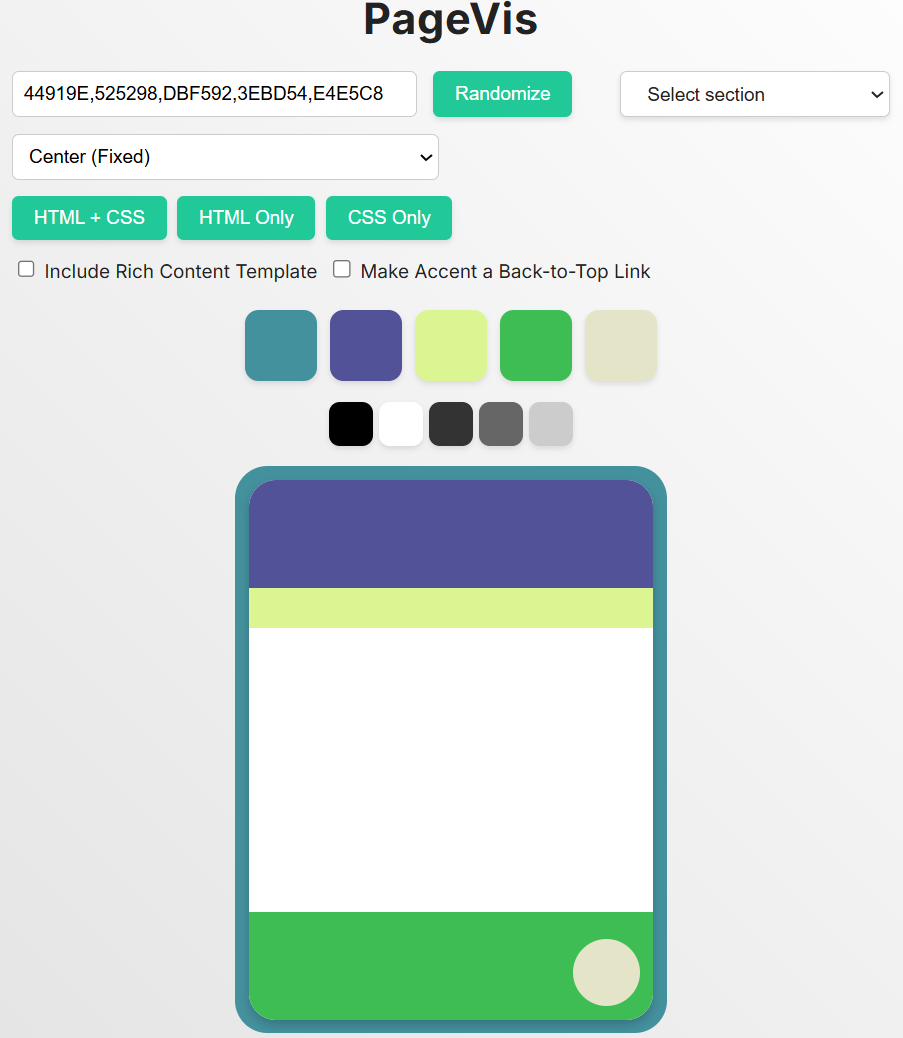
PageVis
PageVis is a web-based tool designed to help users create and visualize webpage layouts with customizable colors and content. It’s ideal for beginners learning HTML and CSS, offering a simple interface to design a page with sections (header, nav, content, footer, and accent), apply color schemes, edit content, and export as HTML and CSS. Exports use semantic HTML, include instructional comments, and provide sample content to guide new learners.
View on GitHub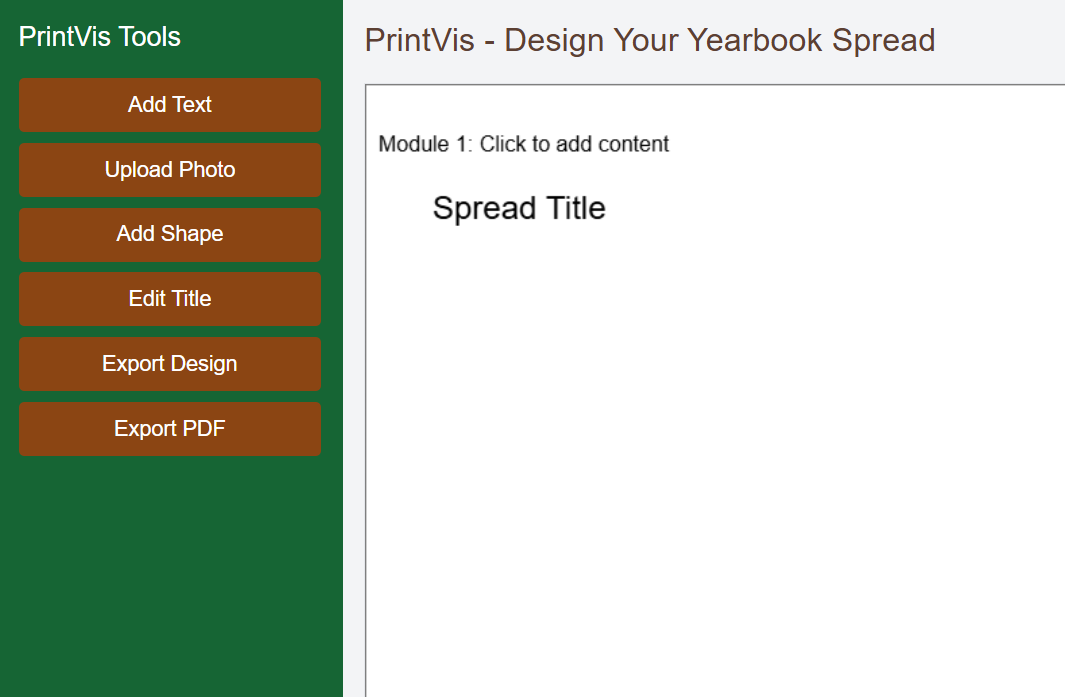
PrintVis
Work in progress - PrintVis is a web-based tool designed to help yearbook students and educators visualize and create two-page yearbook spreads (17" x 11", two 8.5" x 11" pages side by side). It emphasizes a four-module "bullseye" design approach, where students can drag crosshairs to define the intersection of four quadrants and add content to each module using a toolbar. Each module can contain text, photo, and shape elements, with a title and a page number/label (e.g., “Page 1 - Senior Events”) anchoring the design. Built with a simple, intuitive interface, PrintVis bridges the design gap for beginners, making it ideal for high school yearbook classes.
View on GitHub
Aquilian Tracker
The Yearbook Staff Management App is a web-based tool designed to help Granite School District yearbook staff (up to 80 users) manage tasks and track time spent on projects, targeting approximately 57 hours per student per semester (with a 20% buffer, ~68 hours). Hosted at https://kappter.github.io/yearbook-staff-app/, it uses Google OAuth 2.0 for secure authentication restricted to @graniteschools.org domains and integrates with Google Sheets for task data storage.
View on GitHub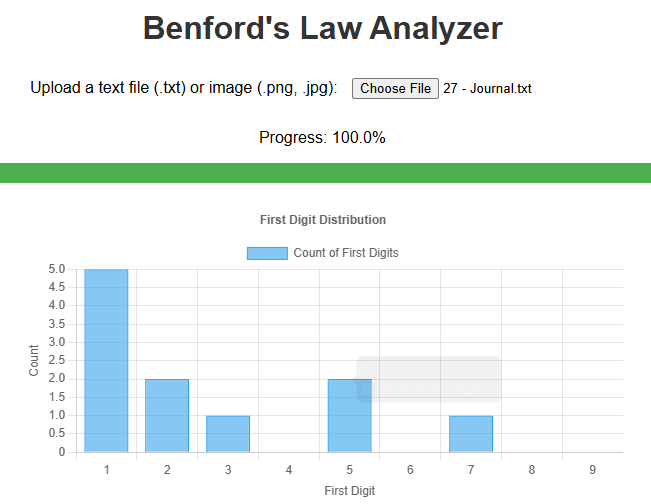
Benford's Law Analyzer
This web application allows users to analyze text files (.txt) or images (.png, .jpg) containing numbers to check if the distribution of first digits (1-9) follows Benford's Law. It provides a live tally of first digits in a bar chart, a progress bar, and a final analysis to detect potential anomalies, which could indicate data manipulation or fraud.
View on GitHub
Perfect10
After a comedian quipped he'd never met a '10' and only encountered three '9s' in his life, I was left pondering: What even is a 10? A year of single-life soul-searching later, I built the Perfect 10 Evaluator—a tongue-in-cheek, code-driven quest to quantify the unquantifiable. Whether you're sizing up a roommate, significant other, or even your mom, this tool playfully crunches the numbers on compatibility, charm, and that elusive '10' factor. Spoiler: It’s less about finding perfection and more about laughing at the absurdity of trying.
View on GitHub
Numbers
Dive into the numerical cosmos with "1001 Integers: Divisors & More," a sleek, canvas-powered web app that transforms integers from 0 to 1001 into a playground of mathematical wizardry! This interactive gem lets you surf the number line with click-and-drag ease, uncovering divisors, prime factors, and base conversions while spotlighting Fibonacci, Catalan, and Bell numbers with vibrant visual flair—perfect for math enthusiasts and curious coders alike!
View on GitHub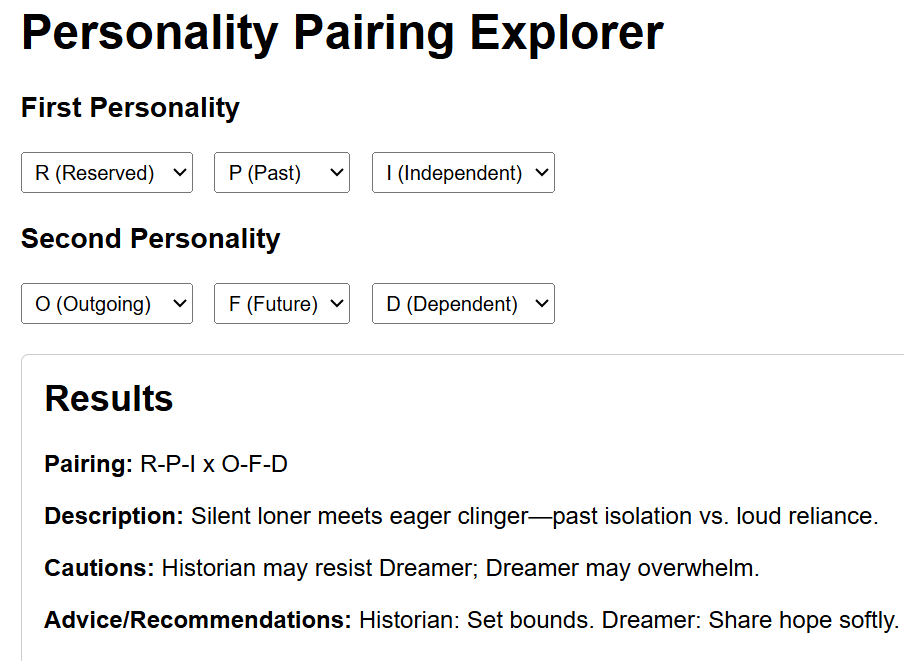
PairPal
PairPal is an interactive web app that explores personality pairings, offering insights into compatibility, potential challenges, and actionable advice. With a sleek interface and a new mode selector, users can switch between different datasets and personality acronyms to explore diverse pairing dynamics.
View on GitHub
WordMaker
This web application generates fictional words based on selected word structures (like Prefix-Root-Suffix) and themes. It combines real prefixes, roots, and suffixes to create new, plausible-sounding words along with their potential definitions.
View on GitHub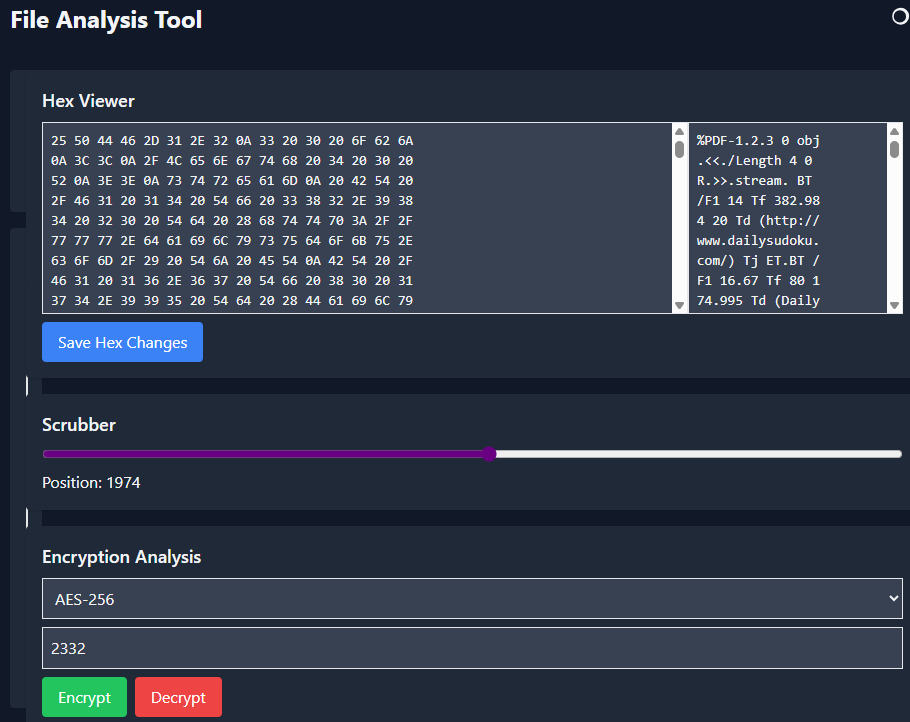
FileEz
A web-based tool for analyzing file structures, designed for educational purposes. Upload files to visualize their binary content, metadata, and sections, with features to explore file name and extension storage, hex data, and encryption.
View on GitHub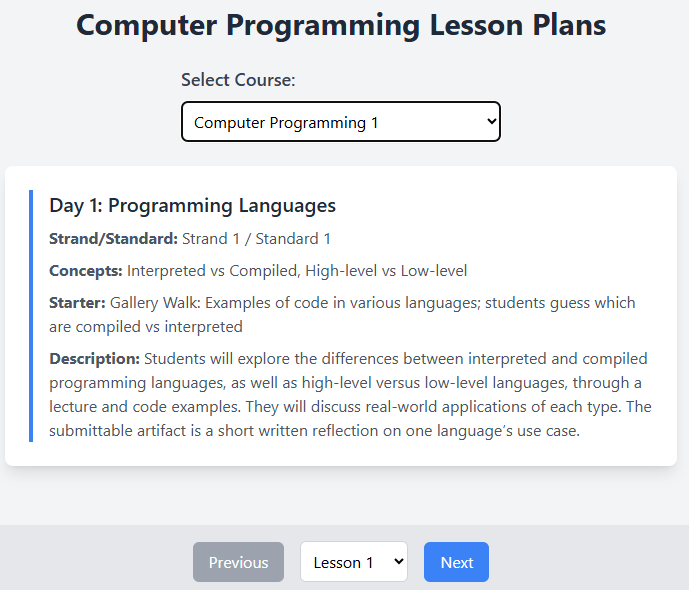
Lesson Visualizer
This project is a web-based application designed to display lesson plans for Computer Programming 1 and Computer Programming 2, aligned with Utah’s curriculum standards. The application features a single-page interface with a dropdown menu to select a course (Programming 1 or Programming 2) and a paginated table displaying lesson details, including Day, Strand/Standard, Title, Concepts, and Starter activity. The interface is styled with Tailwind CSS for a clean, responsive design and uses Papa Parse to parse CSV files containing the lesson plans.
View on GitHub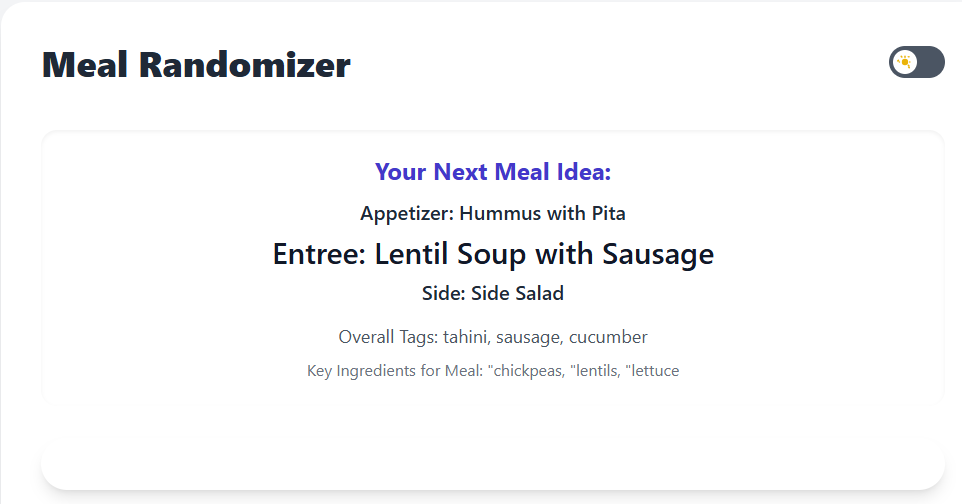
MealPlan
This is a simple web-based application that helps you randomize full meal ideas, including an appetizer, an entree, and a side dish. You can also filter entree suggestions based on specific ingredients you have on hand. It features a modern, responsive design with a light/dark mode toggle.
View on GitHub
Amalgamator
Very much a work in progress with HUGELY ambitious goals. Lemme know if you are a database person, hehe. A utility for combining and processing various data types.
View on GitHub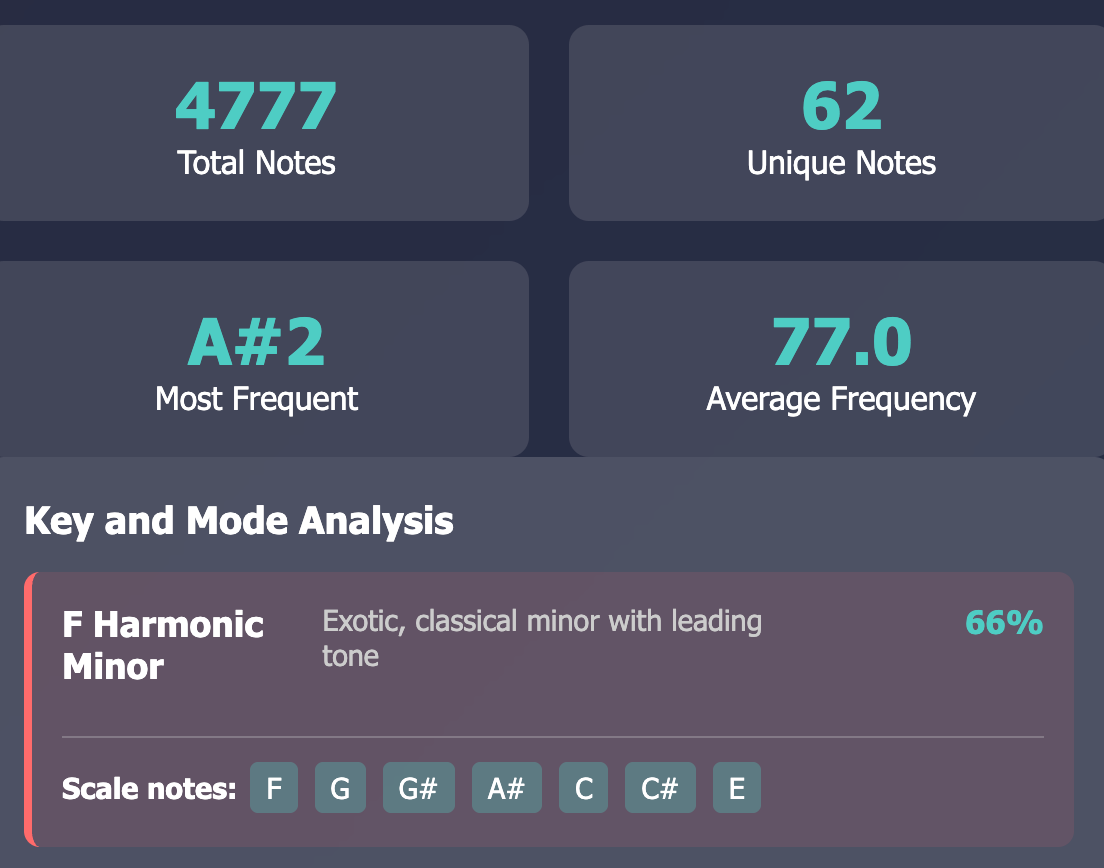
ToneTally
Interactive guitar-piano visualizer with mode analysis and note frequency tally for music like Toccata and Fugue.
View on GitHubArt
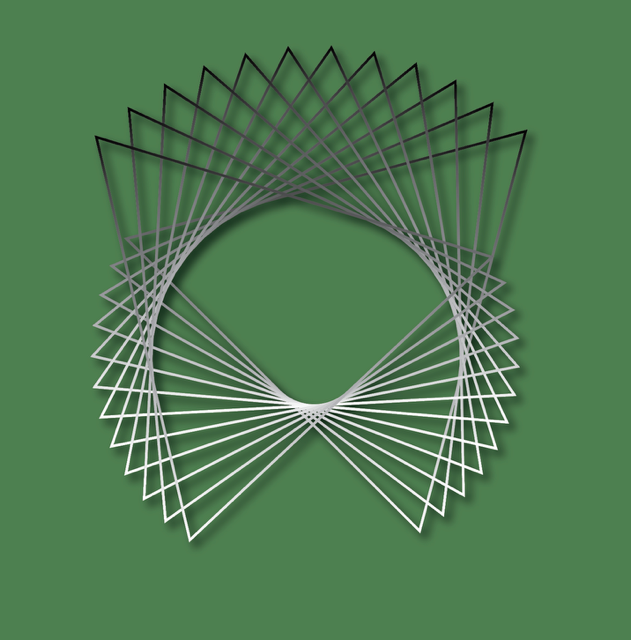 Art, for me, has never belonged to a single medium. It exists somewhere between observation and interpretation—a way of exploring emotion, memory, symbolism, texture, rhythm, and atmosphere without needing everything to be fully explained. Whether through visual design, music, photography, writing, interface design, or experimental digital work, I create less to declare meaning and more to discover it.
One of my early art teachers, Mr. Collins, often repeated the phrase “repetition with constant variation,” and that idea has quietly stayed with me ever since. Much of my creative process still revolves around returning to the same themes from slightly different angles: structure and chaos, technology and humanity, motion and stillness, nostalgia and reinvention. I am drawn to systems, patterns, and visual relationships, but I am equally interested in the imperfections that make something feel alive.
Art has become less about producing finished pieces and more about cultivating attention. A texture on a wall, the shape of old typography, the color relationships in a weathered photograph, the emotional weight of a musical interval, the pacing of silence between ideas—these small details often become the beginning of larger explorations. In many ways, the work shown here represents fragments of an ongoing conversation with curiosity itself: an attempt to slow down long enough to notice something meaningful before it disappears.
Photography
 Photography is one of the ways I practice attention. A camera gives me permission to slow down, look again, and notice what might otherwise pass by unnoticed: the angle of light across a wall, the texture of an old surface, the quiet geometry of a street, or the way a landscape holds memory without saying anything at all.
I am drawn to images that feel discovered rather than staged. Whether I am walking through an urban space, traveling through open terrain, or simply noticing something ordinary at the right moment, photography helps me preserve small encounters with form, shadow, color, and atmosphere. Each image becomes a record of looking closely.
In that sense, photography connects naturally to the rest of my creative work. It is part documentation, part reflection, and part visual study. The photographs here are not just souvenirs of places I have been; they are evidence of curiosity, pauses in motion, and attempts to hold fleeting moments long enough to understand why they mattered.
Music
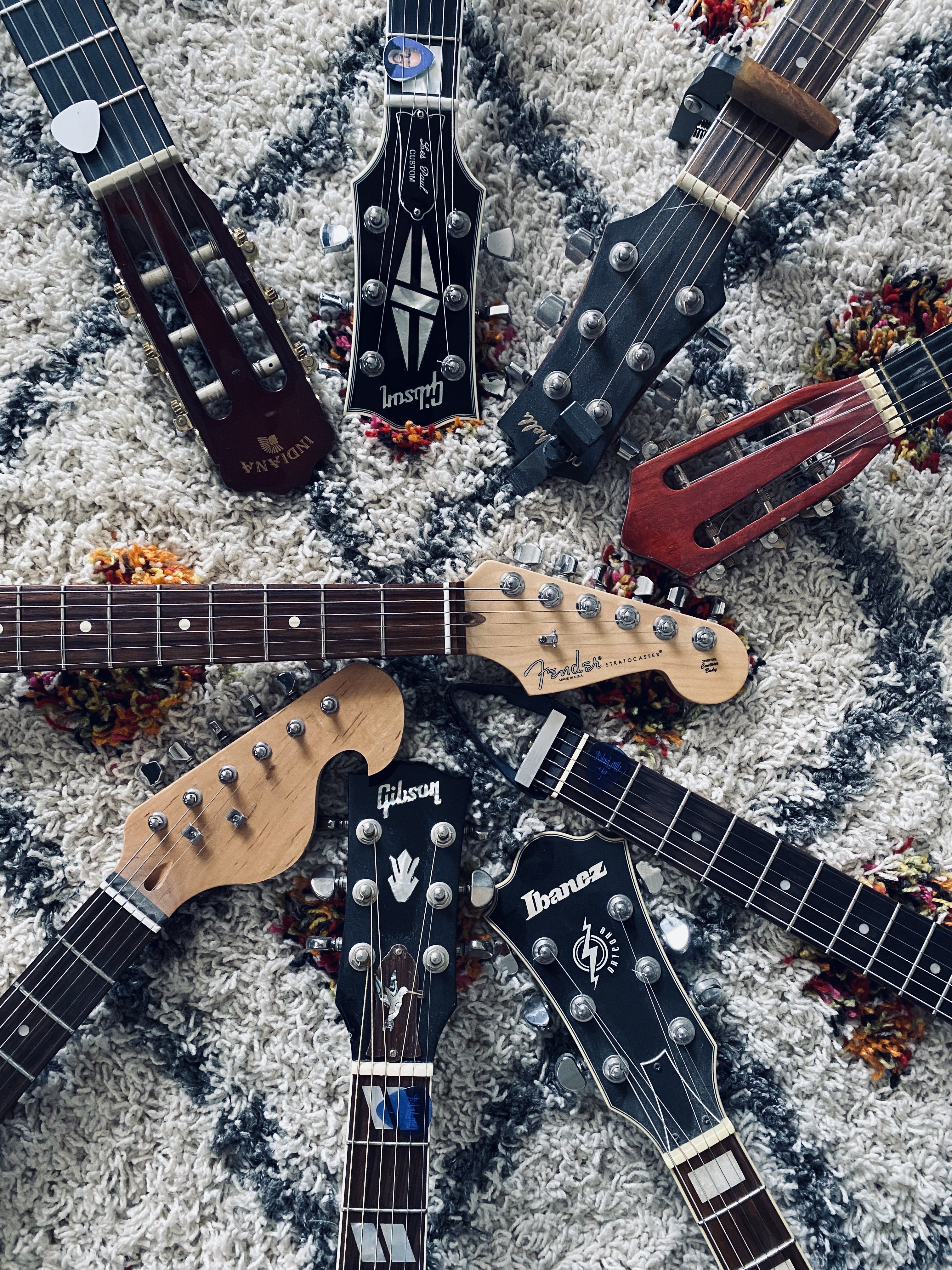 Music has always been less of a performance for me and more of a conversation—an attempt to explore emotion, memory, tension, motion, and atmosphere in ways that language often cannot fully capture. I am drawn to sound not because it provides escape, but because it reveals things. A riff, a chord progression, a rhythmic shift, or even a single sustained note can sometimes communicate more honestly than explanation ever could.
Much of my musical thinking revolves around exploration and experimentation. I spend a great deal of time improvising, studying modes, layering textures, building rhythmic ideas, and following unexpected musical paths simply to see where they lead. Guitar remains my primary companion in that process, though increasingly I find myself interested in systems that connect music, visualization, interaction, and technology together. Many of the applications and experiments elsewhere in this portfolio grew directly out of those musical curiosities.
The recordings here are intentionally raw. Most are first-take sketches, fragments, improvisations, or captured moments rather than polished studio productions. I value preserving the original energy of an idea before refinement smooths away its personality. If you would like to hear more recent work, evolving projects, and current musical experiments, you can also browse my SoundCloud archive here, where I regularly upload new material, sketches, and ongoing explorations.
Guitar Pieces
Hobbies
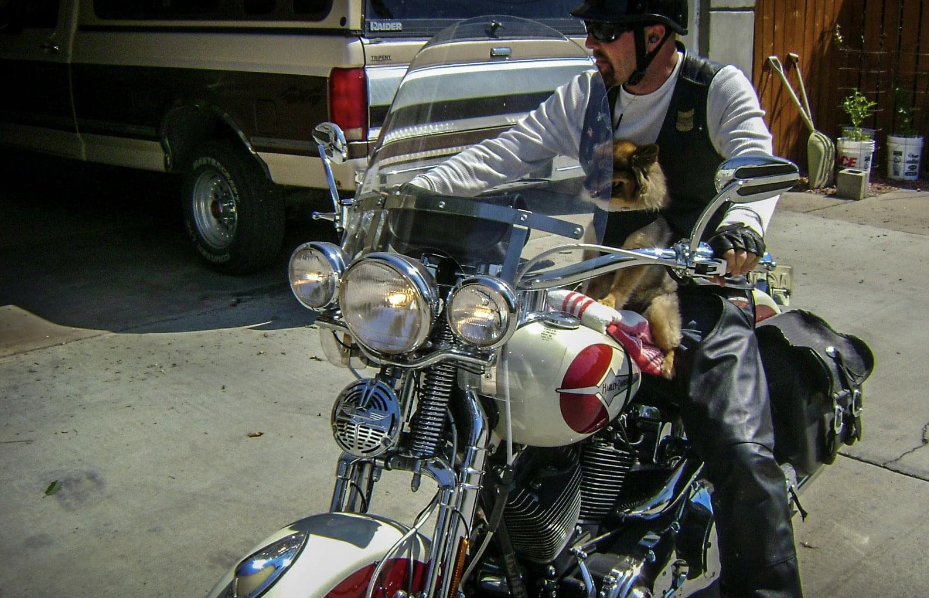 I have always struggled to think of hobbies as mere distractions. Most of the things I return to repeatedly—motorcycles, dictionaries, astronomy, music gear, wandering bookstores, photography, strange software experiments—feel less like entertainment and more like ways of exploring attention, curiosity, and perspective.
Motorcycles, for instance, offer a kind of clarity that is difficult to find elsewhere. Riding demands complete presence. The machine, the road, the weather, the rhythm of movement, the constant negotiation between control and uncertainty—everything narrows into a single uninterrupted moment. At highway speed, distraction disappears. There is only awareness, motion, and the strange calm that comes from total focus.
Dictionaries occupy the opposite end of that spectrum, yet somehow satisfy the same instinct. I can lose hours exploring old words, obscure definitions, etymologies, and forgotten phrases. Language feels alive to me—part historical artifact, part evolving map of human thought. Browsing a dictionary often feels less like studying vocabulary and more like wandering through a museum of consciousness.
Astronomy provides another kind of recalibration. Looking upward has a way of shrinking ego while simultaneously expanding wonder. It reminds me that human beings are both incredibly small and astonishingly capable of meaning-making. That tension has always fascinated me.
Across all of these interests runs a common thread: curiosity. I am drawn to systems, patterns, motion, tools, stories, and experiences that reveal hidden structure beneath ordinary life. Whether I am riding through the desert, studying an old typeface, experimenting with sound, or opening a strange book I found tucked into a dusty shelf somewhere, I am usually chasing the same thing—a deeper sense of connection and understanding.
Interests
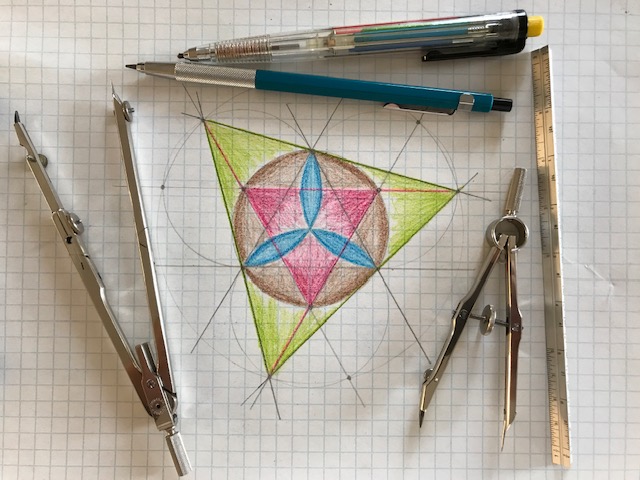 Over the last several years, many of my interests have begun converging around a common set of questions:
How do people learn?
How do systems evolve?
Why do certain patterns repeat across music, technology, relationships, creativity, and personal growth?
Increasingly, I find myself drawn not just to individual disciplines, but to the spaces where disciplines overlap and begin influencing one another.
Over the last several years, many of my interests have begun converging around a common set of questions:
How do people learn?
How do systems evolve?
Why do certain patterns repeat across music, technology, relationships, creativity, and personal growth?
Increasingly, I find myself drawn not just to individual disciplines, but to the spaces where disciplines overlap and begin influencing one another.
I remain deeply interested in computer science, interface design, music theory, creative technology, psychology, systems thinking, education, philosophy, and the ways emerging technologies reshape human behavior and communication. Much of my recent work has focused on building tools that encourage reflection, creativity, collaboration, and deeper interaction—especially through music, visualization, adaptive systems, and educational design.
I have also become increasingly fascinated by process itself: how ideas form, how motivation rises and collapses, how identity changes over time, and how people attempt to make meaning from chaotic experiences. Journaling systems, conceptual mapping, improvisation, pattern recognition, and iterative creative work have all become important parts of that exploration. Many of the projects throughout this portfolio are direct extensions of those interests.
More than anything, I am interested in curiosity that remains active. I admire people who continue experimenting, building, questioning, revising, and learning long after external expectations would suggest they stop. Whether through teaching, music, software, design, writing, or conversation, I continue trying to better understand the relationship between creativity, structure, emotion, and human connection.
Awards
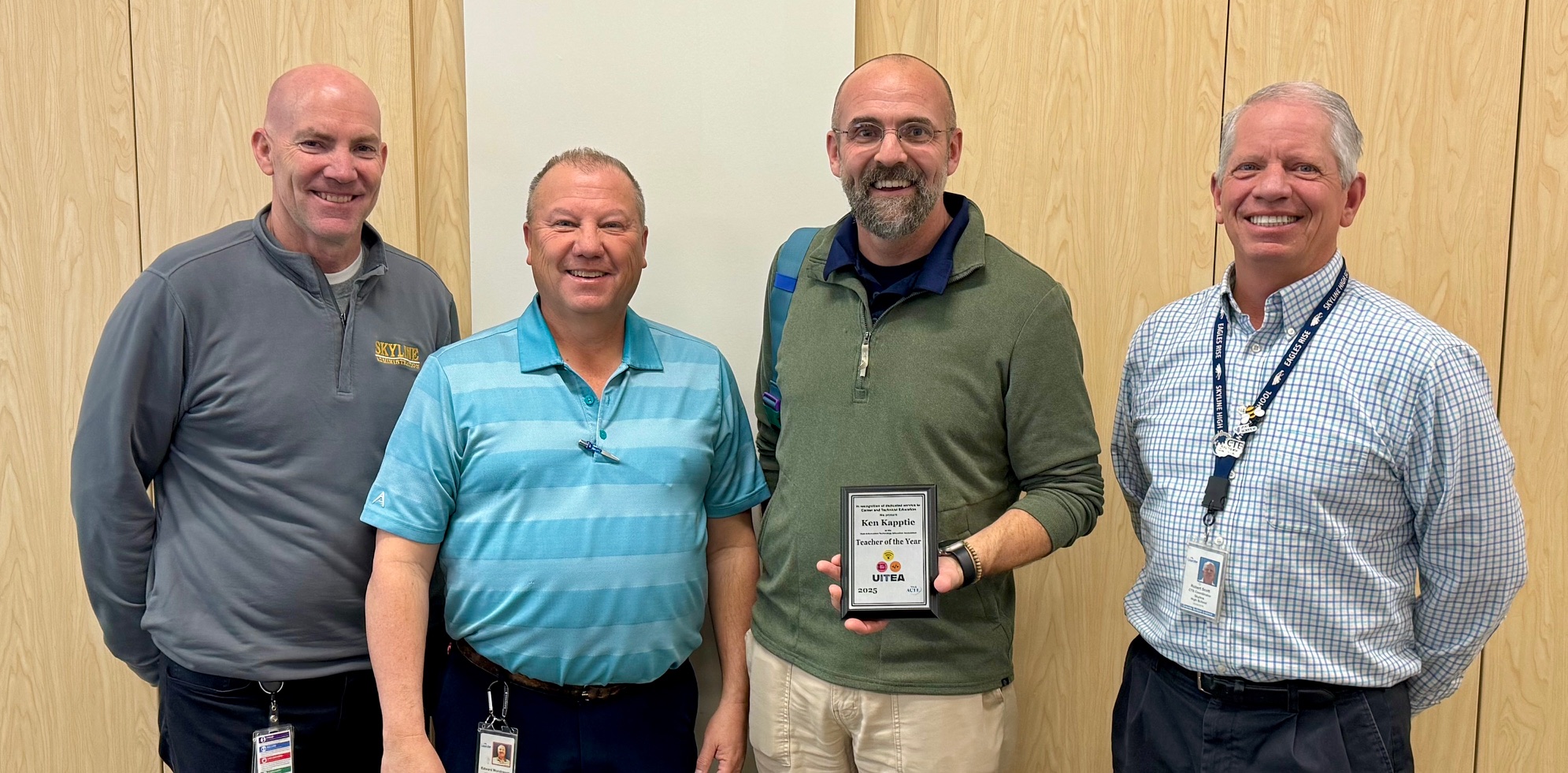 Recognition has never been the goal of my work, but it has occasionally served as a meaningful reminder that the effort mattered beyond the classroom itself. Most teaching victories happen quietly: a student discovering confidence, a project finally clicking into place, a difficult year ending with growth instead of surrender. Awards simply offer visible markers along a much larger journey of teaching, mentorship, creativity, and continued experimentation.
These honors reflect not only classroom instruction, but also years spent building programs, advising students, exploring creative technology, supporting leadership organizations, and encouraging students to create work that extends beyond school walls into authentic personal and professional growth.
UITEA Teacher of the Year (2025)
Awarded by the Utah Information Technology Education Association in recognition of contributions to computer science education, student leadership, TSA advising, and creative technology programs at Skyline High School.
Skyline CTE ProfileKSL Teacher Tribute Wall (2024)
Honored by Granite School District and KSL for dedication to technology education, student mentorship, and creative leadership at Skyline High School.
Read AnnouncementSkyline Golden Talon Award (2024)
Recognized by Skyline High School for contributions to student programs, technology education, yearbook, TSA leadership, and school community involvement.
Skyline FacultyU.S. Presidential Scholars Distinguished Teacher (2018 & 2023)
Selected by Presidential Scholar recipients as a Distinguished Teacher in recognition of mentorship, instructional impact, and long-term educational influence.
View RecognitionUpcoming Projects
 Upcoming projects are where unfinished ideas begin taking shape. Some are books, some are tools, some are systems, and some are still only fragments of language, design, or code waiting for the right structure. I think of this section as a preview of what is currently forming beneath the surface.
These works-in-progress reflect the same themes that move through much of my teaching and creative work: mastery, reflection, technology, meaning-making, and the search for better ways to help people understand themselves and the systems around them.
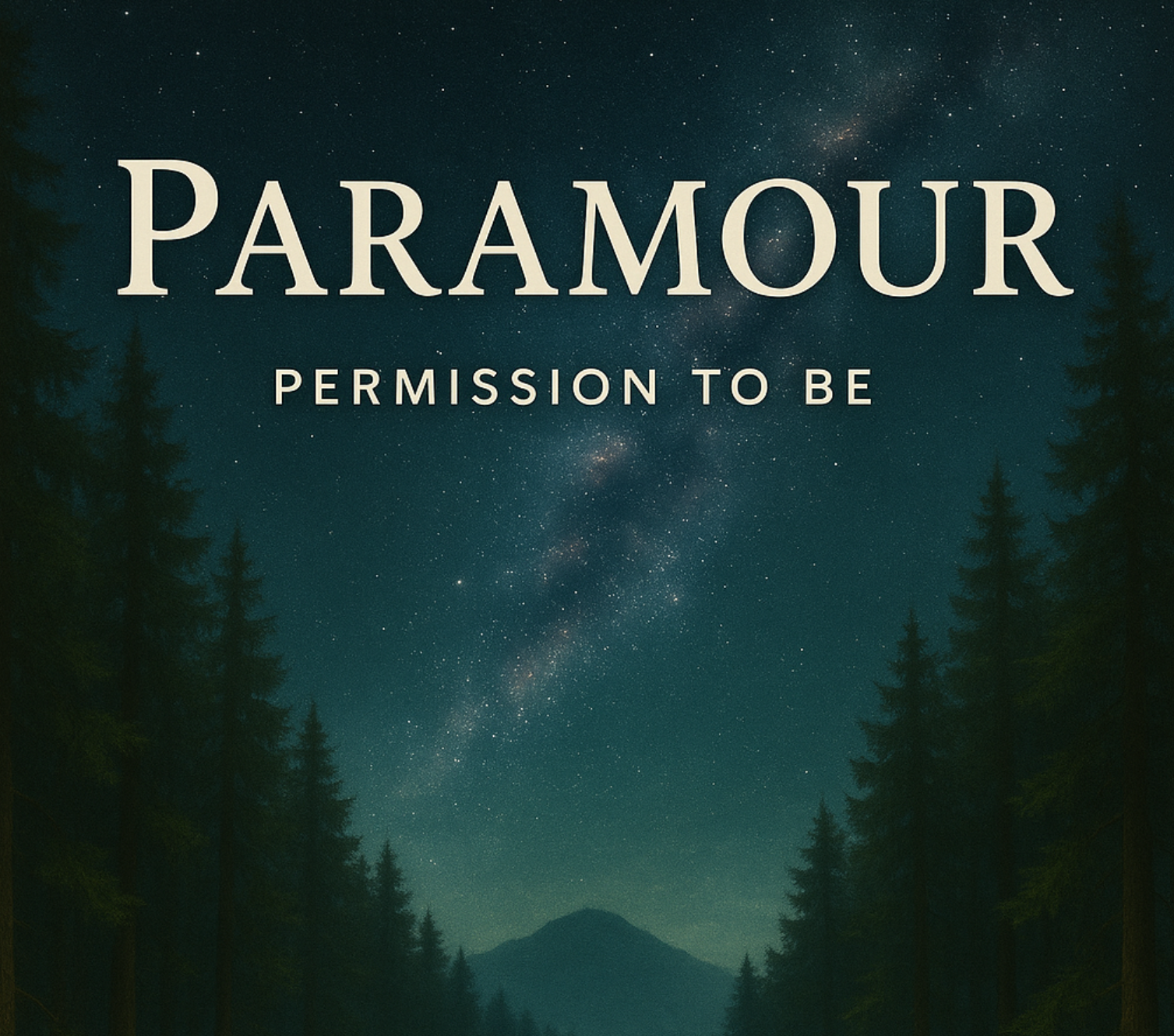
Paramour | Permission to Master
A reflective book project exploring ambition, mastery, identity, and the difficult question of what it means to devote yourself deeply to something. It is for the high-achiever, the late bloomer, the restless learner, and anyone wondering whether credentials alone can ever fully explain a life’s work.
Coming SoonWords in the Wild
A collection of essays and reflections about language, technology, nature, creativity, and attention. This project explores how words shape perception, how tools shape behavior, and how meaning often appears when ordinary experience is observed closely enough.
Coming SoonTeaching the Future
A practical and philosophical guide for educators working with coding, media, robotics, creative technology, and student portfolios. The project focuses on helping students build visible evidence of growth while teachers design classrooms where experimentation and reflection can thrive.
Coming Soon